
Options Trading
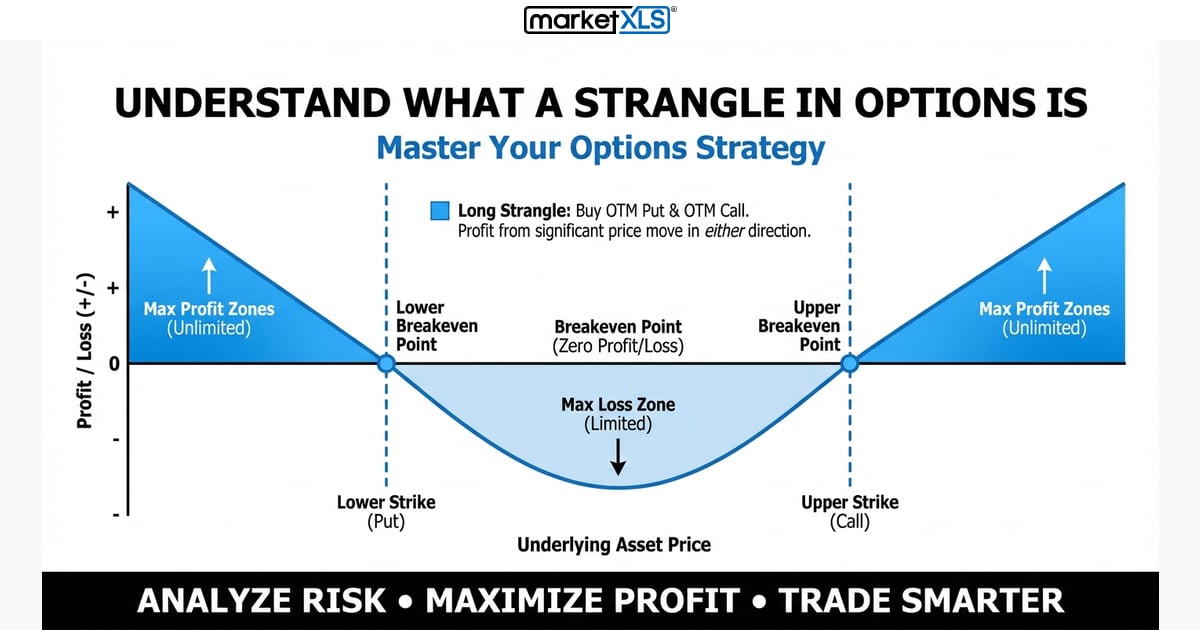
A long strangle buys an out-of-the-money call and put with the same expiry. It profits from a large move either way; the maximum loss is the premium paid.
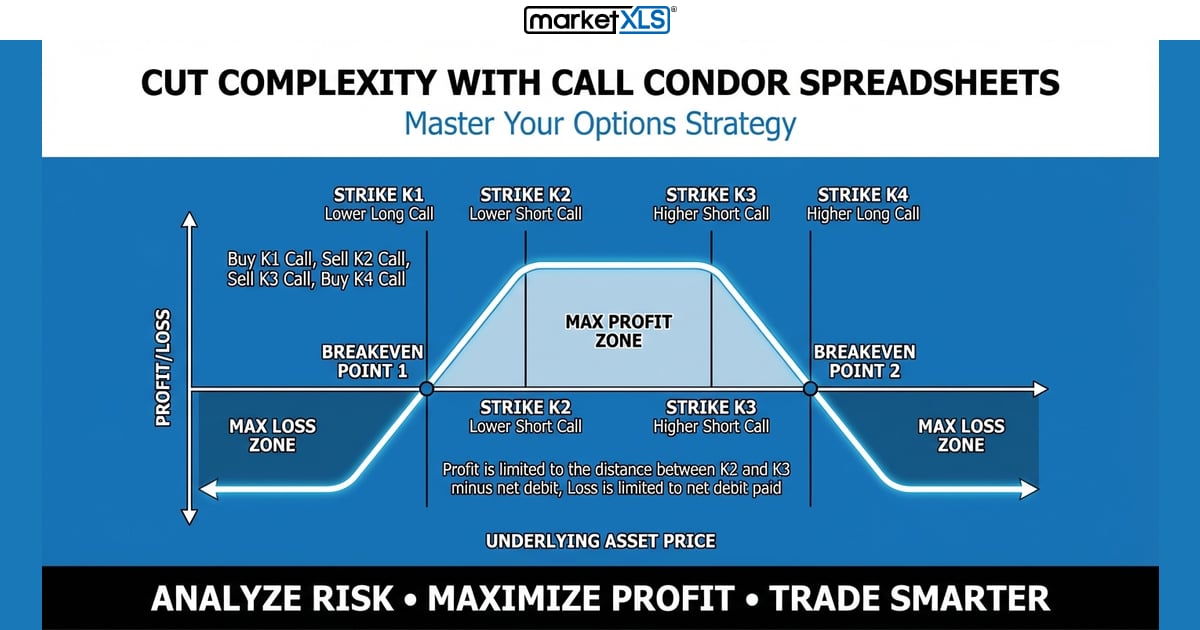
A long call condor uses four calls at four strikes to profit if a stock stays in a range. Structure, max profit and loss, and Excel templates.
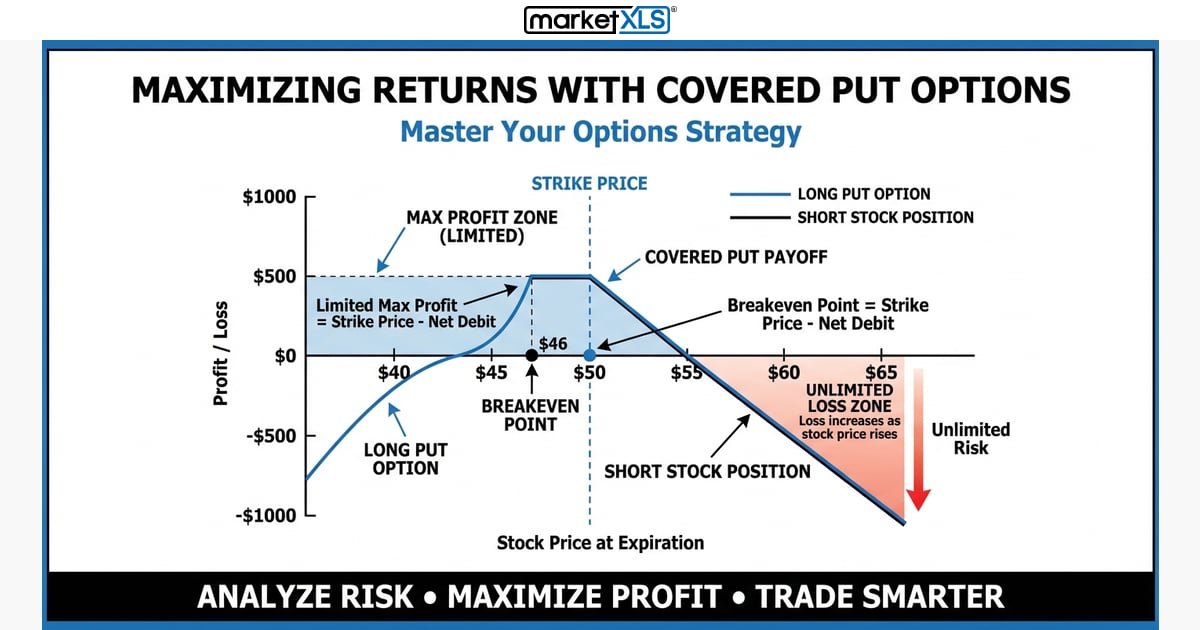
A covered put combines a short stock position with a short put. Maximum profit, the unlimited upside risk, when traders use it, and how it differs from a collar.
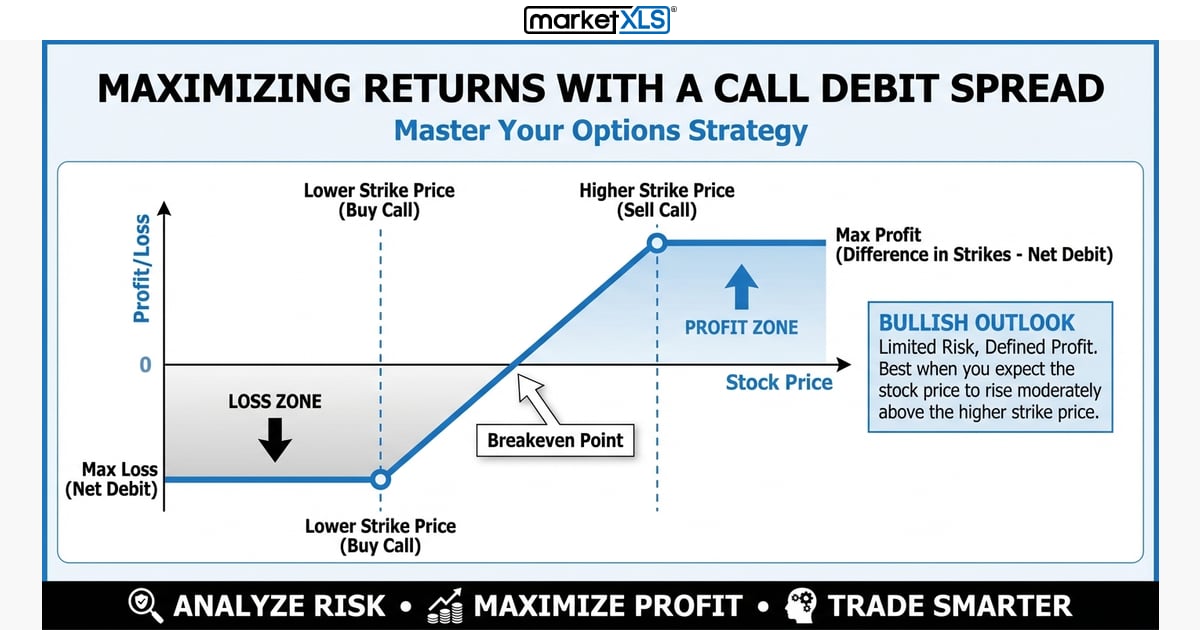
A call debit spread buys a lower-strike call and sells a higher-strike call. Max loss is the debit, max profit is the strike width minus the debit, breakeven is lower strike plus debit.
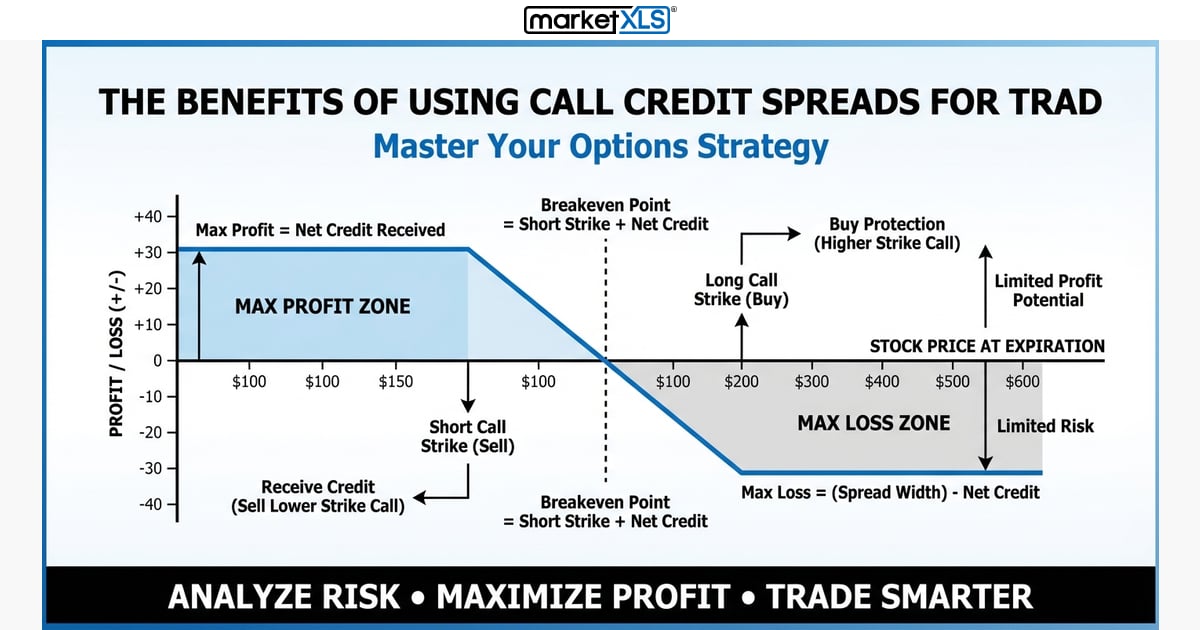
A call credit spread sells a lower-strike call and buys a higher-strike call for a net credit. Max gain is the credit, max loss is width minus credit, and it profits below the short strike.
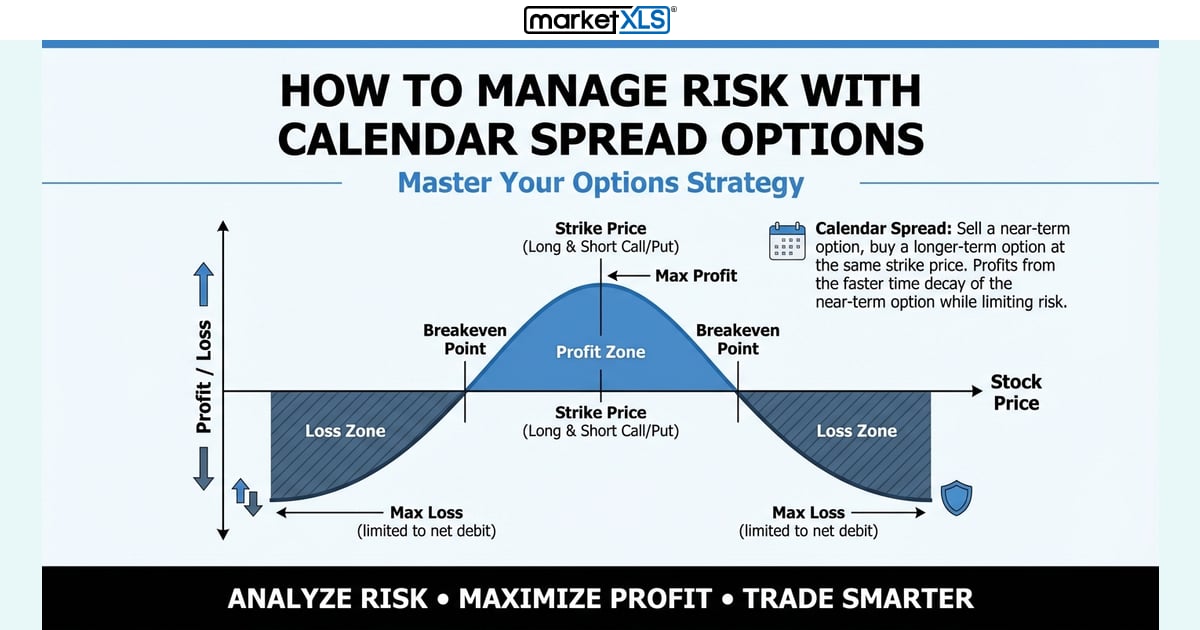
A calendar spread sells a near-term option and buys a longer-dated one at the same strike. Max loss is the net debit; it profits most if the stock stays near the strike.
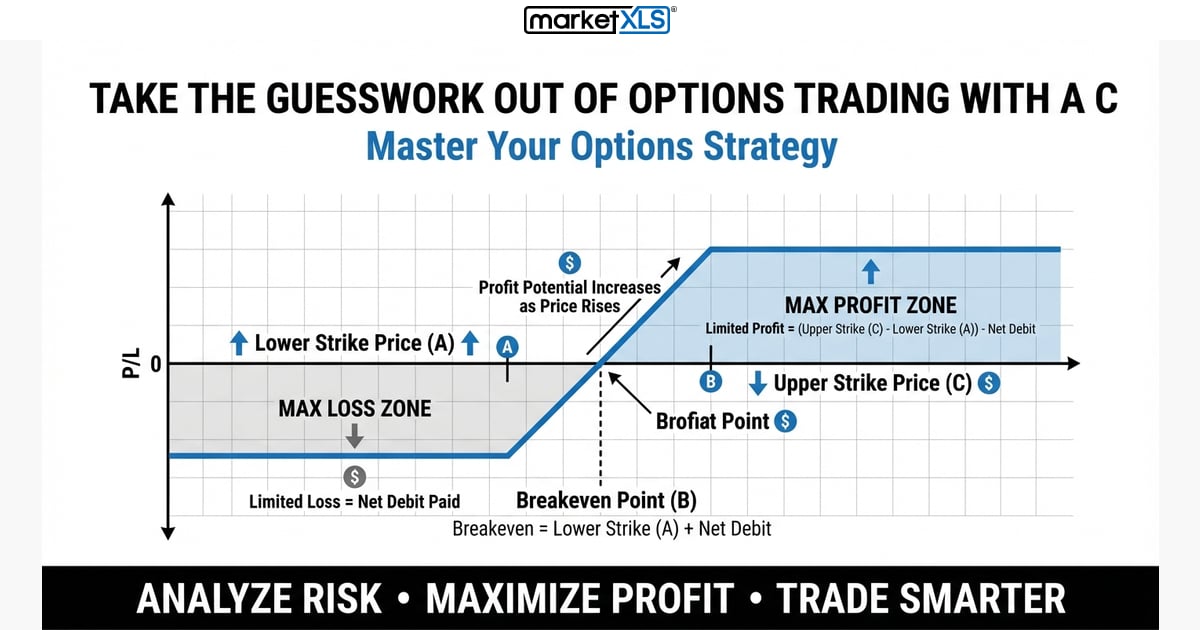
A call option calculator prices a call from stock price, strike, time, volatility, and rates, and shows breakeven and profit at expiration before you buy.
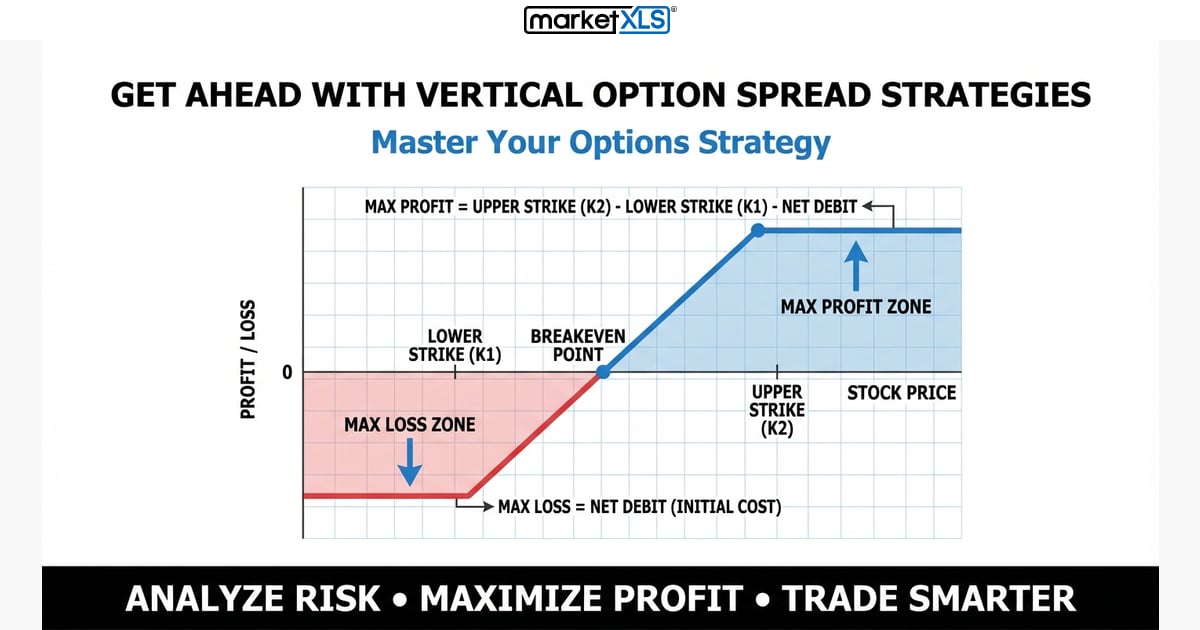
A vertical spread buys one option and sells another of the same type and expiration at a different strike. The four types, when each fits, and how the risk is capped.
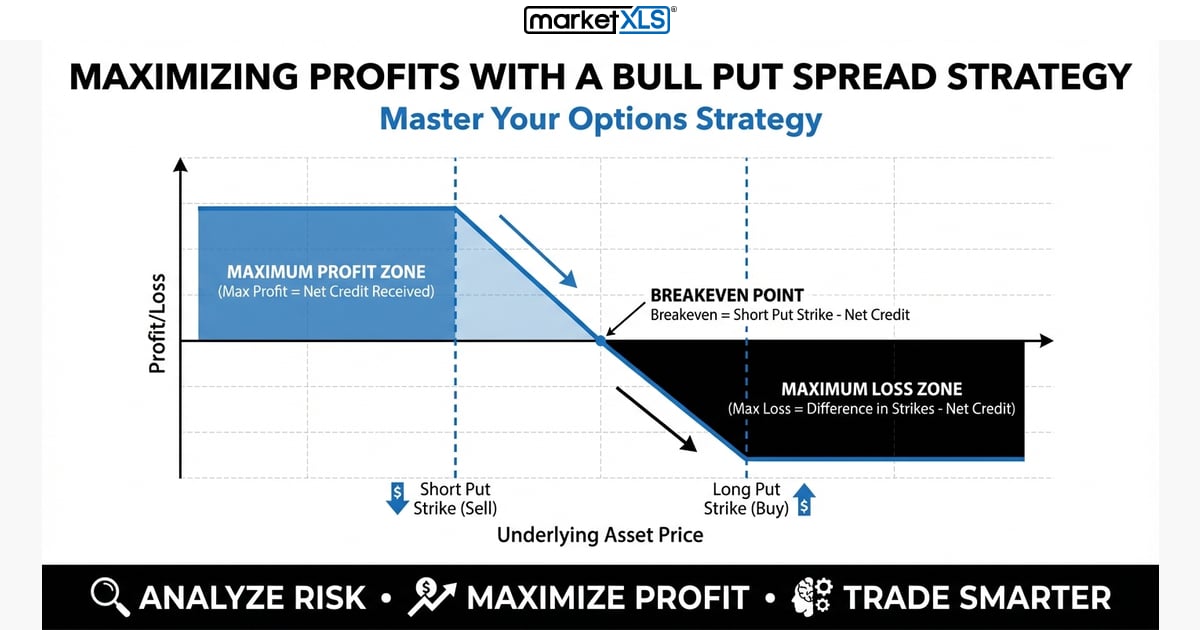
A bull put spread sells a higher-strike put and buys a lower-strike put. Max profit is the net credit; max loss is the strike width minus the credit.
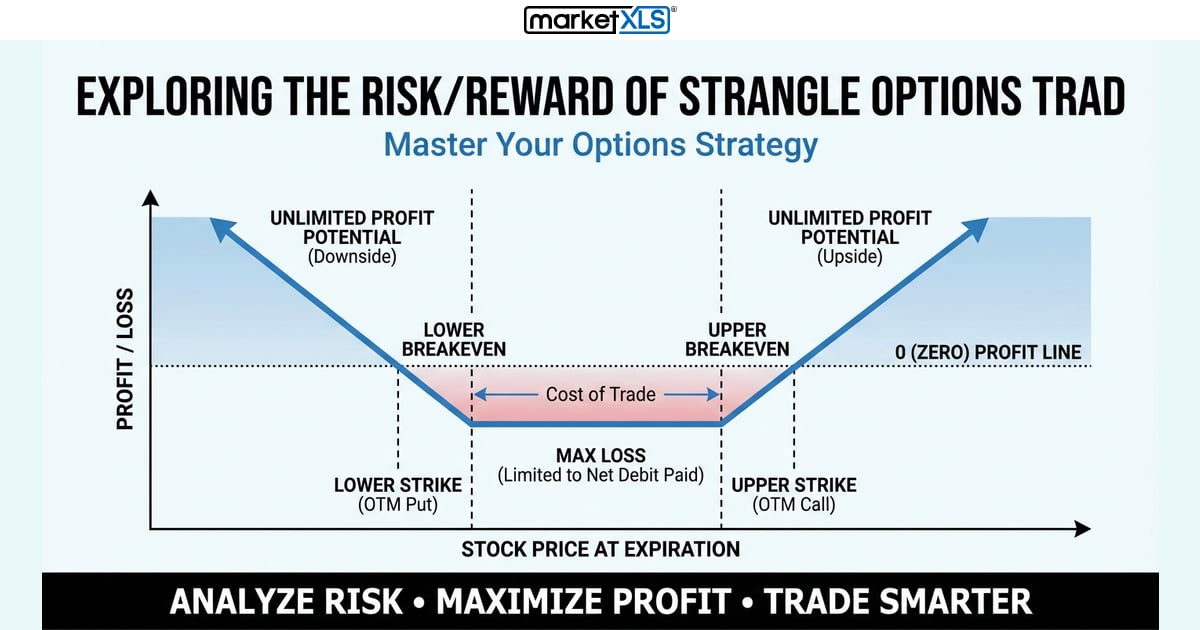
A strangle combines an out-of-the-money call and put. Long vs short strangle payoff, breakevens, maximum risk, and the role of implied volatility.
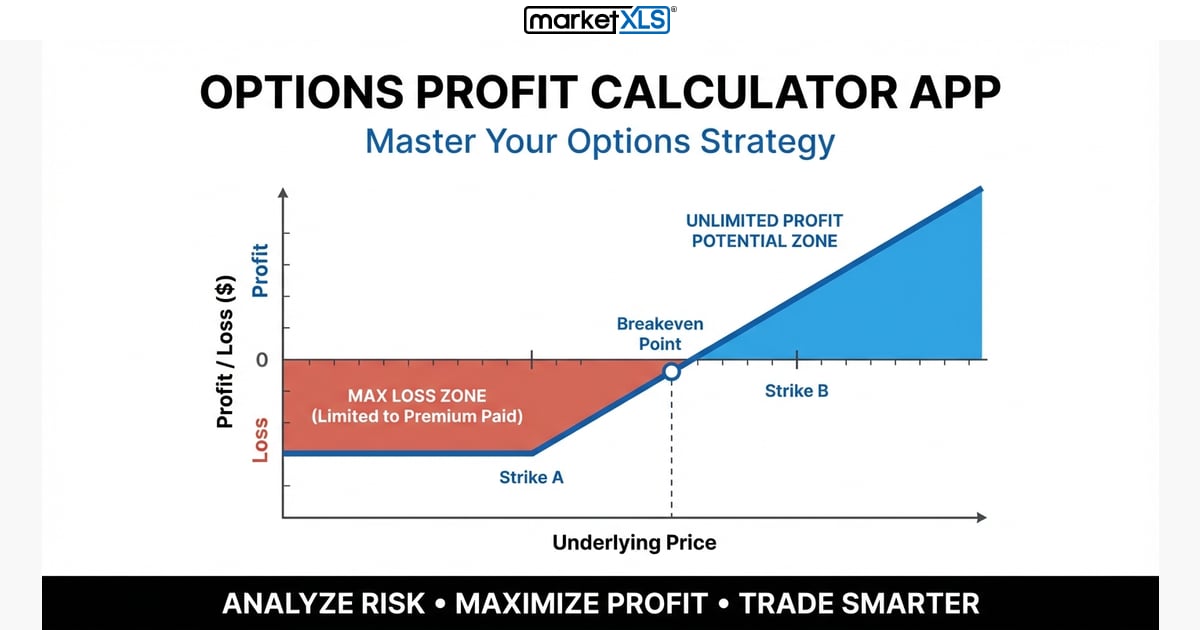
An options profit calculator shows the profit or loss of an options trade across stock prices and dates. What to look for and how the MarketXLS calculator works.
A covered call means selling a call against 100 shares you own. Higher volatility raises the premium you collect, but it caps your upside and only partly offsets losses.
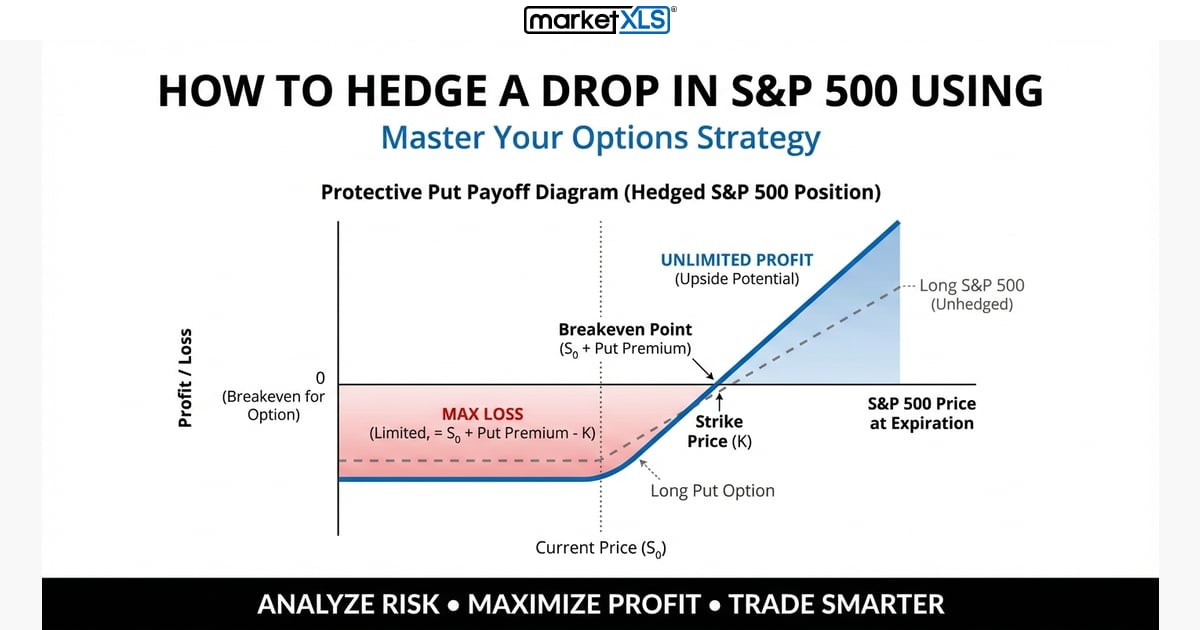
Ways to hedge a drop in the S&P 500: buying index puts, writing covered calls, inverse ETFs, and selling calls, with MarketXLS templates to see each payoff.
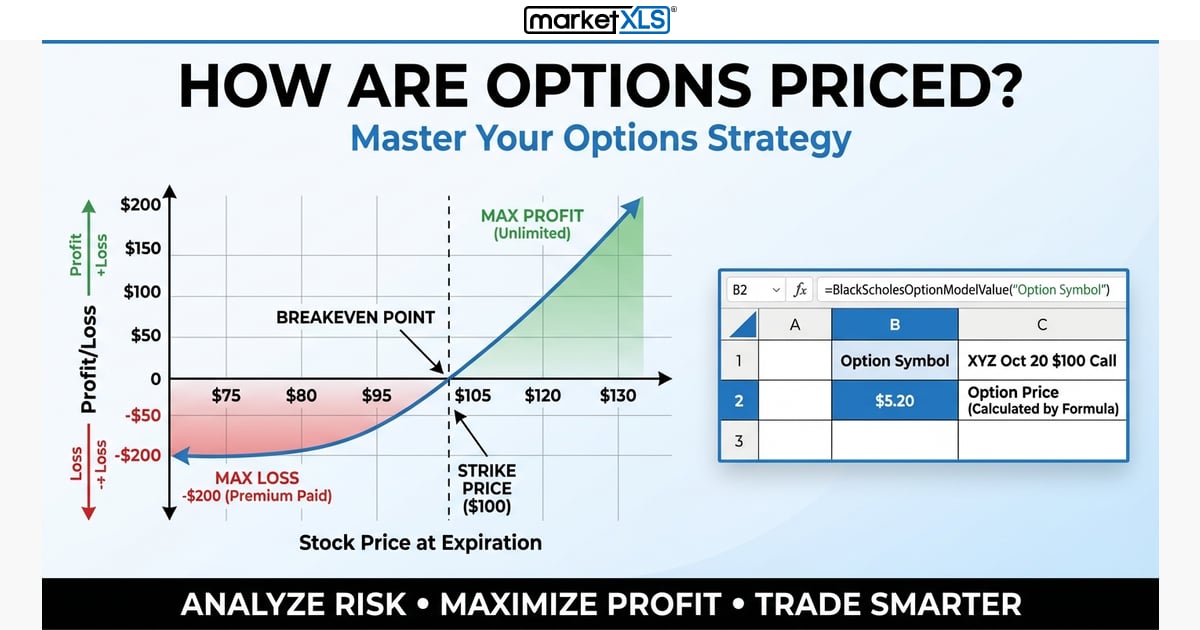
An option premium equals intrinsic value plus extrinsic (time) value. Models like Black-Scholes price the extrinsic part from volatility, time, and rates.
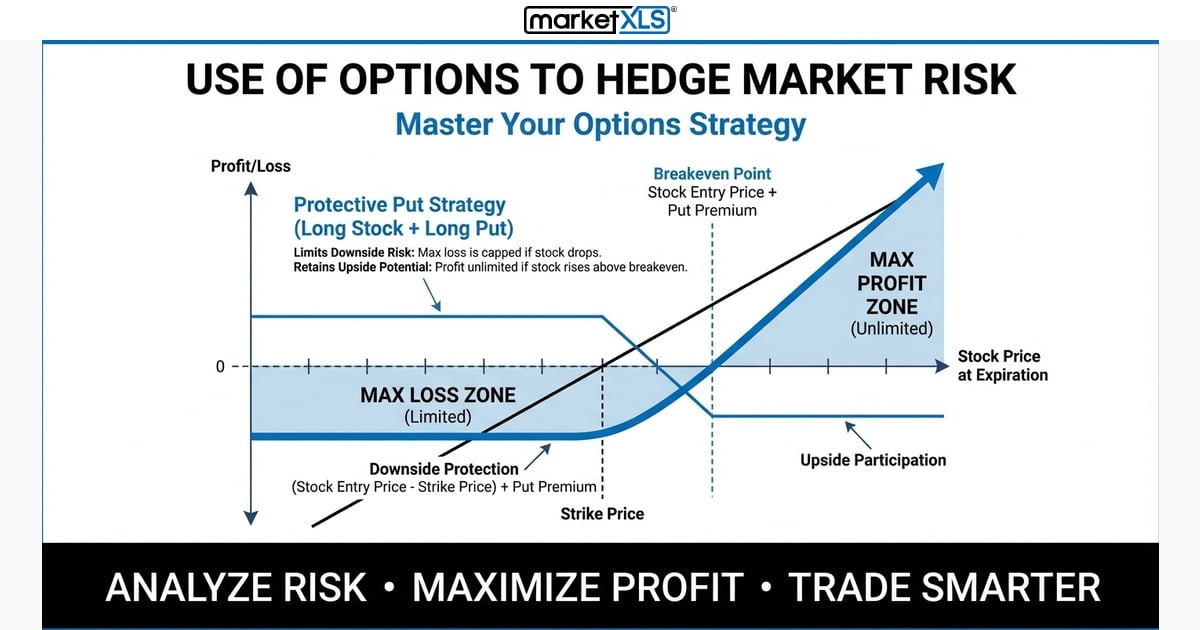
Five ways to hedge a stock portfolio with options: long puts, collars, put spreads, fences and covered calls, with the cost and protection trade-off of each.
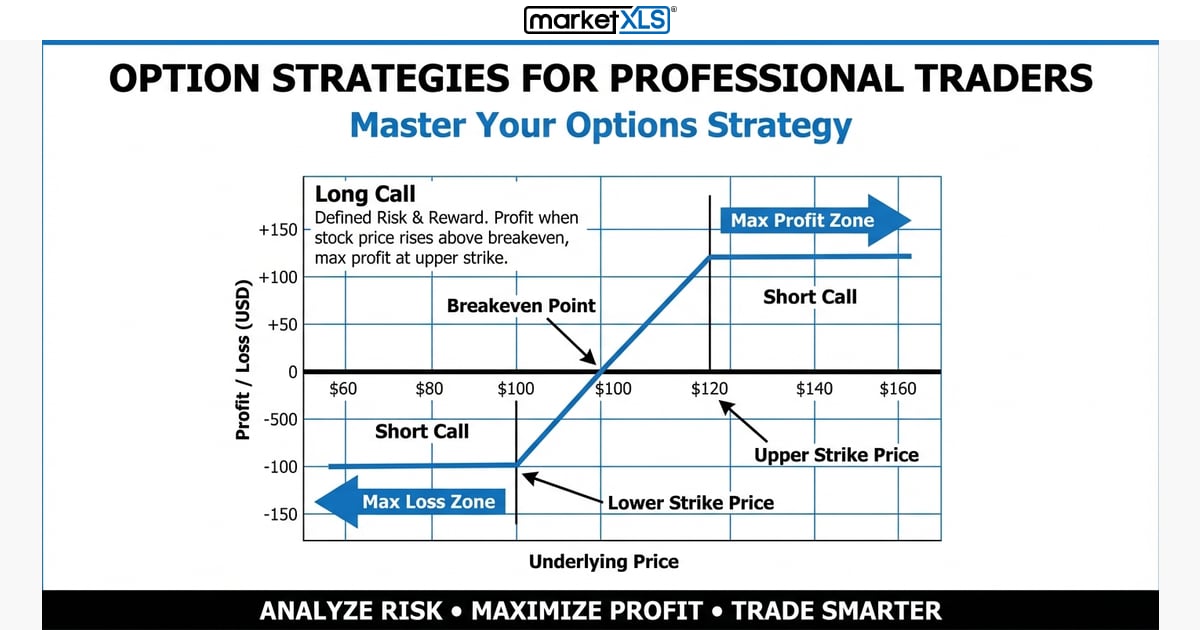
Five defined-risk option strategies traders use by market view: bull call spread, call ratio back spread, bear put spread, put ratio back spread, and iron condor.